
You’ve probably heard of World of Warcraft, the massively multiplayer online role-playing game that’s undeniably left its mark on the digital landscape. It’s more than just a game, it’s a community, a culture, that’s transformed how we view and interact in online spaces. From the emergence of guilds and in-game economies to the rise of esports and cross-cultural exchanges, WoW has set the bar for what an online gaming experience should be. But what’s the real impact of this gaming titan on the online culture? There’s more to it than meets the eye.
Key Takeaways
- World of Warcraft (WoW) revolutionized online gaming communities by fostering tight-knit guilds and promoting camaraderie through in-game events.
- WoW influenced in-game economies in other online games through player trading, auction houses, and the importance of professions.
- The game set new standards in game design and mechanics, with innovative features such as quest progression, loot distribution, and class customization.
- WoW played a pivotal role in establishing esports, hosting competitive tournaments that drew professional players and offered significant prize pools.
- The game also promoted cross-cultural virtual interactions, connecting players globally and fostering cultural exchange and empathy.
Evolution of Online Gaming Communities
In the domain of online gaming, you’ve likely noticed the notable changes in gaming communities, a shift largely influenced by the popularity of World of Warcraft. This game has redefined social bonding within these spaces. You’ve probably been part of, or at least witnessed, the creation of tight-knit guilds where player collaboration is key. These guild dynamics aren’t just about tackling quests together; they’re about building virtual friendships that last.
Community events are a staple in World of Warcraft. Participating in these events isn’t just about scoring loot or gaining experience points. It’s also about engaging with other players, fostering a sense of kinship and camaraderie. These online interactions have certainly changed the way players engage with each other, making the gaming experience more social and community-driven.
Now, you might be thinking, ‘But I’m a lone wolf, I don’t need a guild.’ That’s okay. But remember that player engagement can greatly enhance your gaming experience. Collaborating with others can help you navigate challenging quests and defeat formidable enemies. So, why not give it a try? You might just find a new way to experience the world of online gaming.
Influence on In-game Economies
Delving into the world of in-game economies, you’ll notice that World of Warcraft’s (WoW) system has deeply influenced how these economies function in other online games. Player trading and virtual markets are prominent features in WoW, with gold farming and inflation causing constant shifts in the market.
Auction houses are teeming with rare items, becoming centers of economic balance where supply meets demand. Currency exchange also plays a significant role; players can exchange real money for in-game currencies, adding another layer of depth to the game economy.
Professions and item crafting are critical for maintaining and growing player wealth. Whether you’re a blacksmith crafting weapons or an alchemist brewing potions, your products contribute to the virtual economy, often bartered for other items or services.
| Player Trading | Gold Farming | Auction Houses |
|---|---|---|
| Creates a robust market | Causes inflation | Offers rare items |
| Facilitates bartering | Impacts player wealth | Balances supply and demand |
| Professions contribute | Real money exchange | Item crafting essential |
As you can see, the impact of WoW on in-game economies is profound, shaping not only the game itself but the entire landscape of online gaming.
Impact on Game Design and Mechanics
Often, you’ll find that WoW’s innovative game design and mechanics have greatly impacted other online games. This influence can be seen in several aspects:
- Player engagement and game balance
- Quest progression and loot distribution
- Class customization and raid mechanics
- PVP dynamics and player interactions
WoW revolutionized player engagement through its immersive world exploration and NPC interactions. It also managed to achieve a delicate game balance, making each class feel unique yet equally reliable.
The quest progression in WoW set a new standard for online games, with a leveling system and skill trees that kept players hooked. The game’s loot distribution system also made sure that every player felt rewarded for their efforts.
WoW’s class customization allowed for a personalized gaming experience. The game’s complex raid mechanics also introduced a new level of strategy and cooperation to the genre.
Lastly, WoW’s PVP dynamics fostered intense player interactions. Whether it was player versus environment or player versus player, every encounter was a thrilling challenge that required strategy and skill.
Role in Establishing Esports
You can’t overlook WoW’s significant role in establishing esports as a mainstream form of entertainment. WoW’s competitive tournaments not only drew in professional players but also boosted spectator engagement. The thrill of watching players battle it out, with their meticulously crafted training regimens, brought an adrenaline rush to the masses, cementing the popularity of esports.
Sponsorship deals and broadcast partnerships started flowing in, thanks to WoW’s influence. It helped esports evolve from a niche form of entertainment to a global phenomenon, broadcasted to millions worldwide. These deals further propelled the professionalization of gaming, with players now being recognized not just as hobbyists, but legitimate athletes.
The prize pools in WoW tournaments were nothing short of impressive, further incentivizing the pursuit of gaming as a career. Some of the biggest names in esports today owe their success to these tournaments. WoW’s influence in establishing esports has been profound and far-reaching, shaping the future of entertainment. It’s a demonstration of the power of this game, showing how a virtual world can have real-world impacts. It’s fascinating, isn’t it?
Promoting Cross-Cultural Virtual Interactions
Beyond shaping the world of esports, WoW also helped foster cross-cultural virtual interactions, a unique phenomenon in the online gaming world. As you explore Azeroth, you’re not just slaying monsters; you’re connecting with a diverse player base, meeting people from all over the globe, and forming lasting virtual friendships.
This promotes a rich cultural exchange. You might pick up a few words in a different language, learn about cultural traditions, or even gain new perspectives and ideas. You’re also likely to encounter language barriers, but overcoming these is part of the fun, and often leads to humorous misunderstandings.
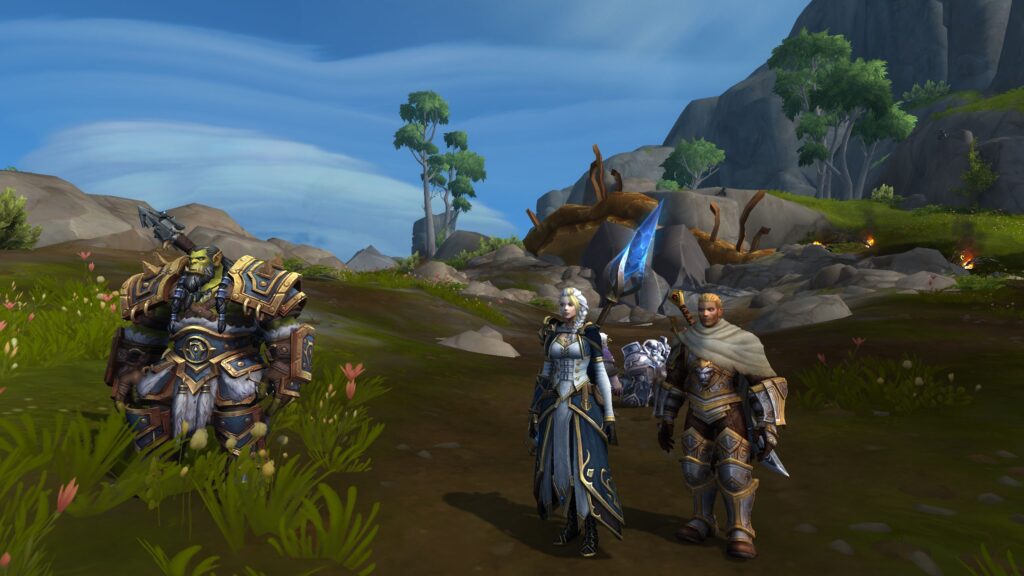
The game’s online communication and cross-server interactions facilitate these global connections. Here are some benefits you might experience:
- Enhanced problem-solving skills from strategizing with players who think differently
- Improved communication skills, as you navigate language and cultural differences
- A broader worldview, as you interact with players from various cultural backgrounds
- Increased empathy, as you learn about and understand the experiences of others
Through WoW, you’re not just playing a game; you’re part of a worldwide community, learning from each other while enjoying a shared passion.
Frequently Asked Questions
How Has World of Warcraft Affected Physical Health and Wellbeing of Its Players?
You’ve likely experienced addiction issues, exercise deprivation, sleep disturbances, and social isolation. WoW can affect mental health, cause eye strain, even nutritional neglect. It’s your physical health and wellbeing at stake.
What Is the Demographic Breakdown of World of Warcraft Players?
You’d be surprised, the demographic of WoW players is diverse. Gender statistics show a good mix, with various ages, occupations, and income levels represented. Geographic distribution is global, impacting gaming time and social behavior.
How Has World of Warcraft Influenced Educational and Learning Environments?
You’ve seen how World of Warcraft’s game-based learning enhances critical thinking and language development. It’s also improved collaborative skills through virtual economies, problem-solving strategies, and fostered digital citizenship. Quite educational, don’t you think?
What Are Some Popular World of Warcraft Fan Creations Inspired by the Game?
You’ve probably seen WoW’s impact through fan-made expansions, cosplay creations, and custom maps. In-game machinima, music inspired by WoW, fanfiction developments, and bustling community forums are all evidence of the game’s inspiring influence.
How Has World of Warcrafts Narrative and Lore Impacted Popular Literature and Media?
You’ve observed WoW’s narrative evolution, haven’t you? Its storytelling techniques and lore inspiration have seeped into popular culture. Media adaptations abound and fantasy literature reflects its influence. Its cinematic influence? Undeniable. WoW’s shaped our culture immensely.